

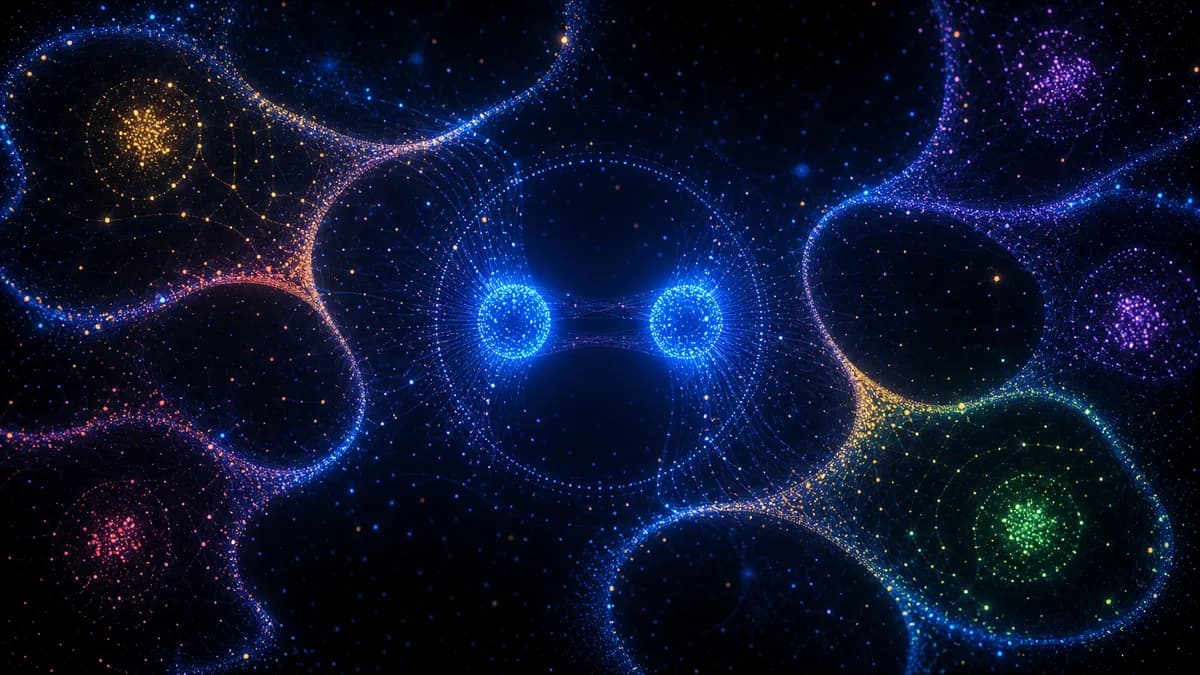
 01 / 09
PhysicsJul 2026
Particle Life: When Dust Learned to Keep Its Distance
The first version made only two things: singular clumps and expanding dust. One repulsion zone changed everything.
8 min read
Loading
Project 01 · A nine-part field notebook
From the force that keeps two particles apart to the engine that lets two thousand of them build a world. Read the physics, the code, and the design in the order they became understandable.
01 / 09The first version made only two things: singular clumps and expanding dust. One repulsion zone changed everything.
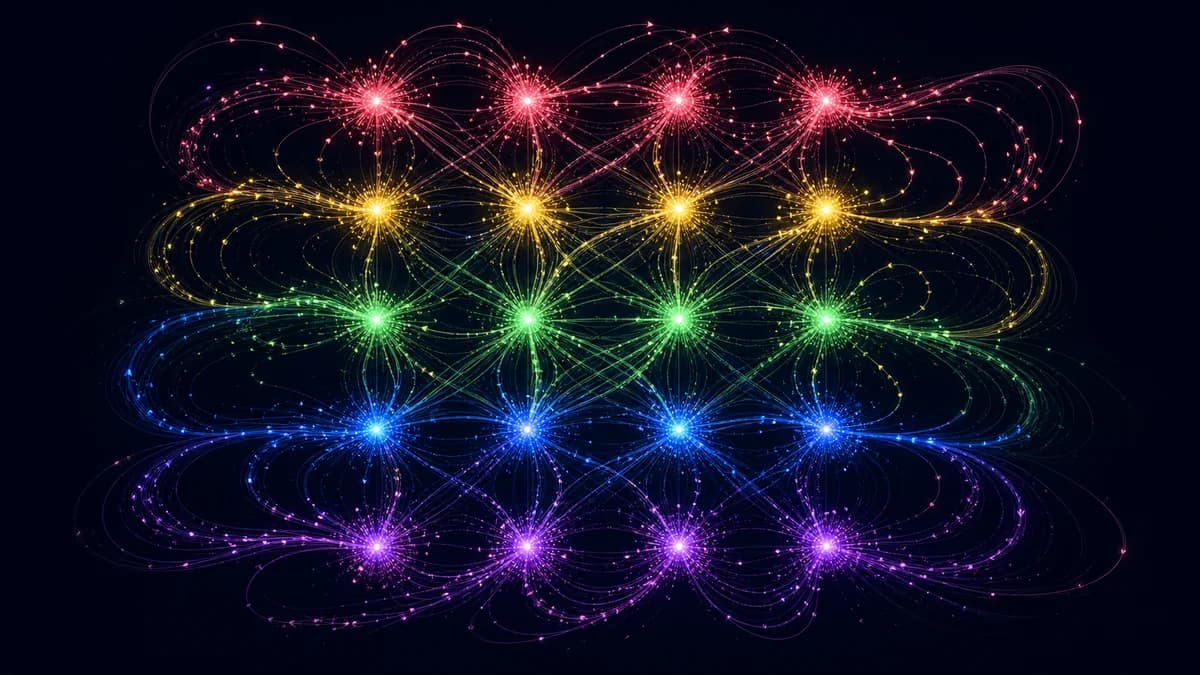 02 / 09
The matrix is not a palette or a control panel. It is a directional language for attraction, repulsion, pursuit, and structure.
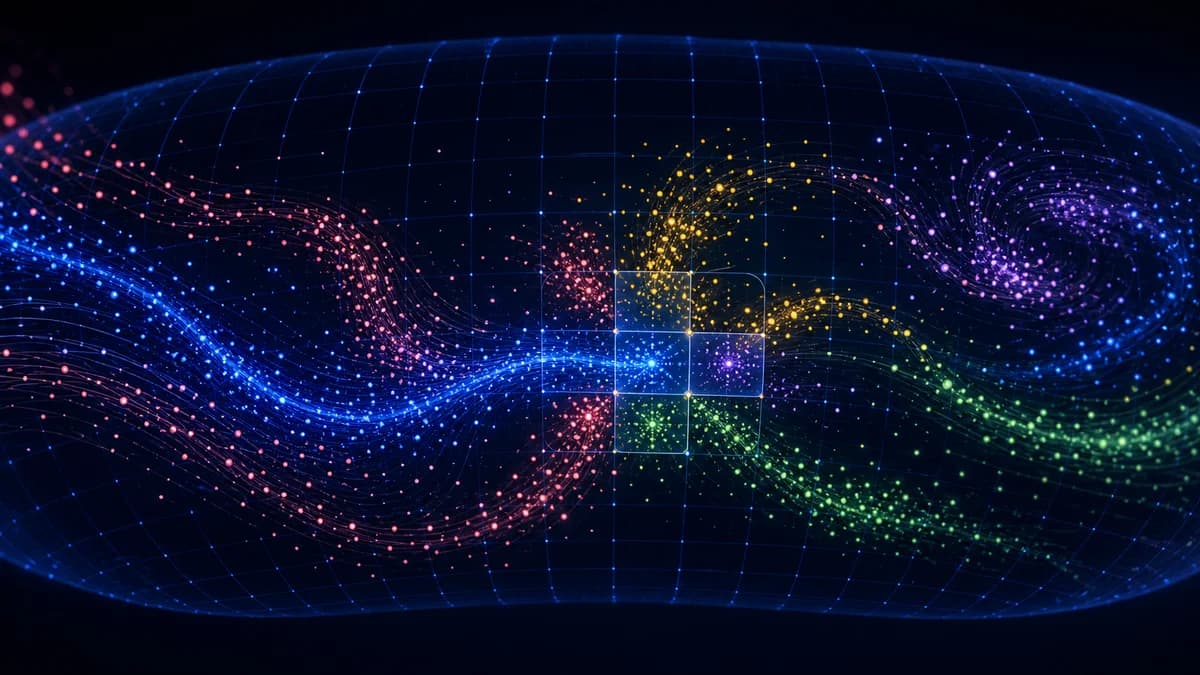 03 / 09
Fixed time, deterministic seeds, a toroidal world, and the spatial hash that lets two thousand particles remain an experiment.
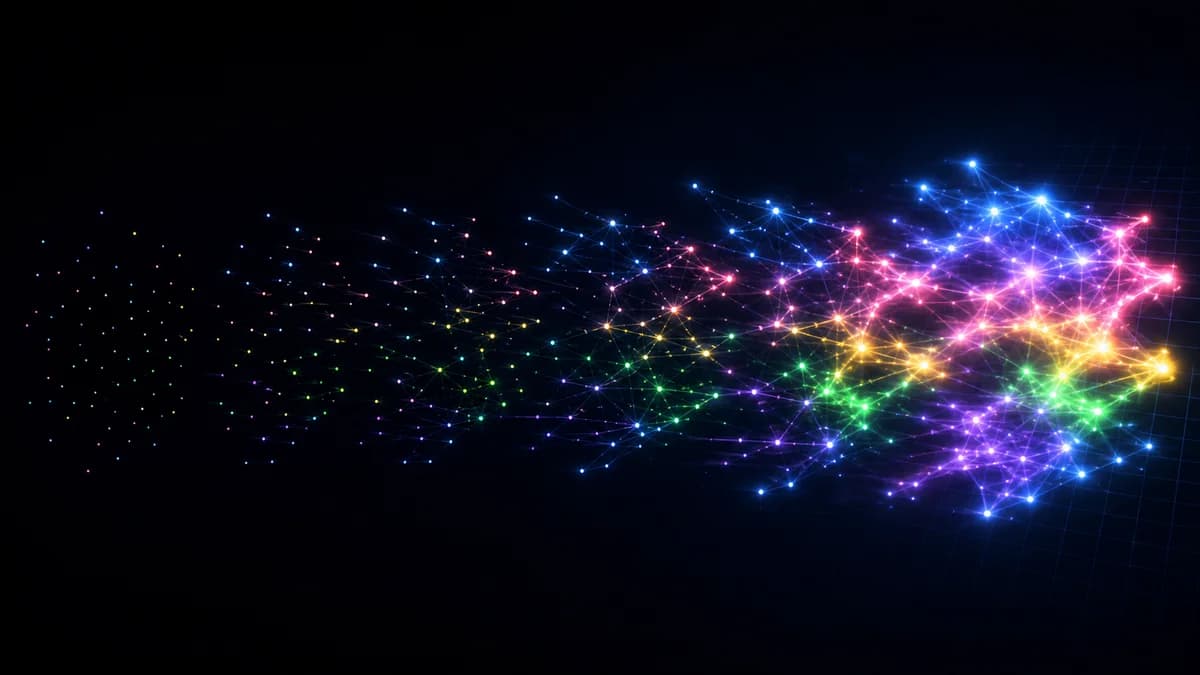 04 / 09
The renderer is not decoration. It makes distance, motion, relationships, and failure legible without changing the physics underneath.
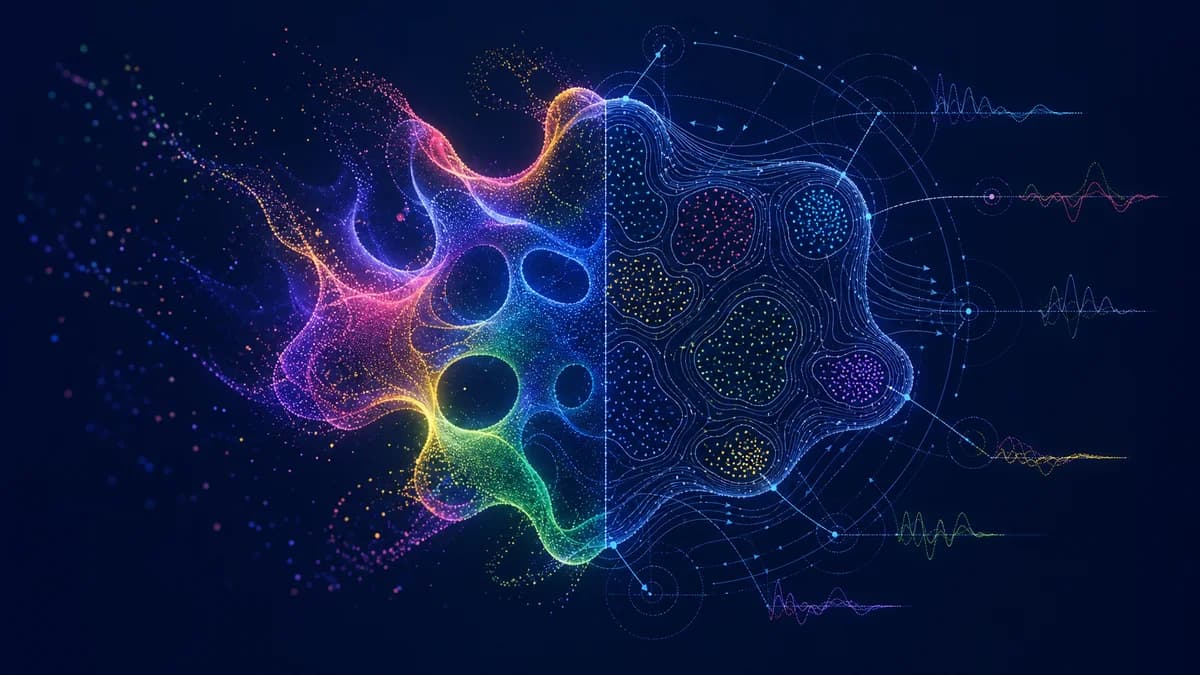 05 / 09
A beautiful pattern is a discovery prompt, not a result. The project needed measurements that could disagree with my eyes.
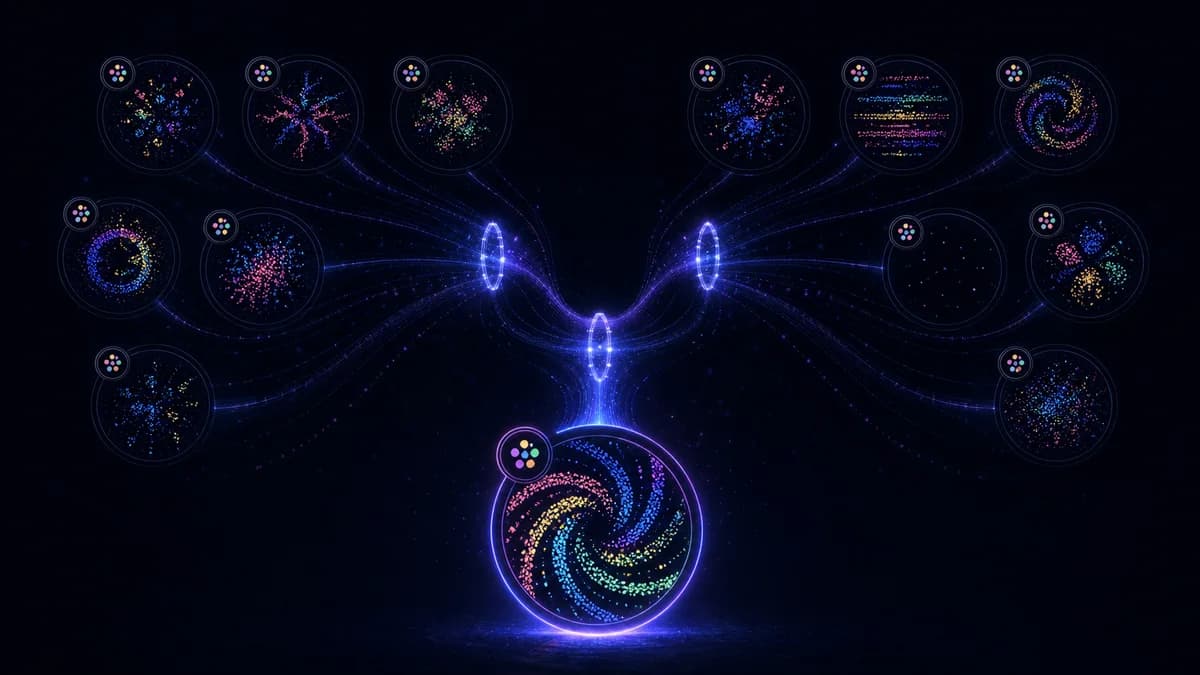 06 / 09
Random rules are easy. Finding random rules that remain structured and in motion requires a definition of interesting—and exposes its limits.
 07 / 09
The interface must invite play without hiding causality, expose evidence without becoming a dashboard wall, and work on a phone.
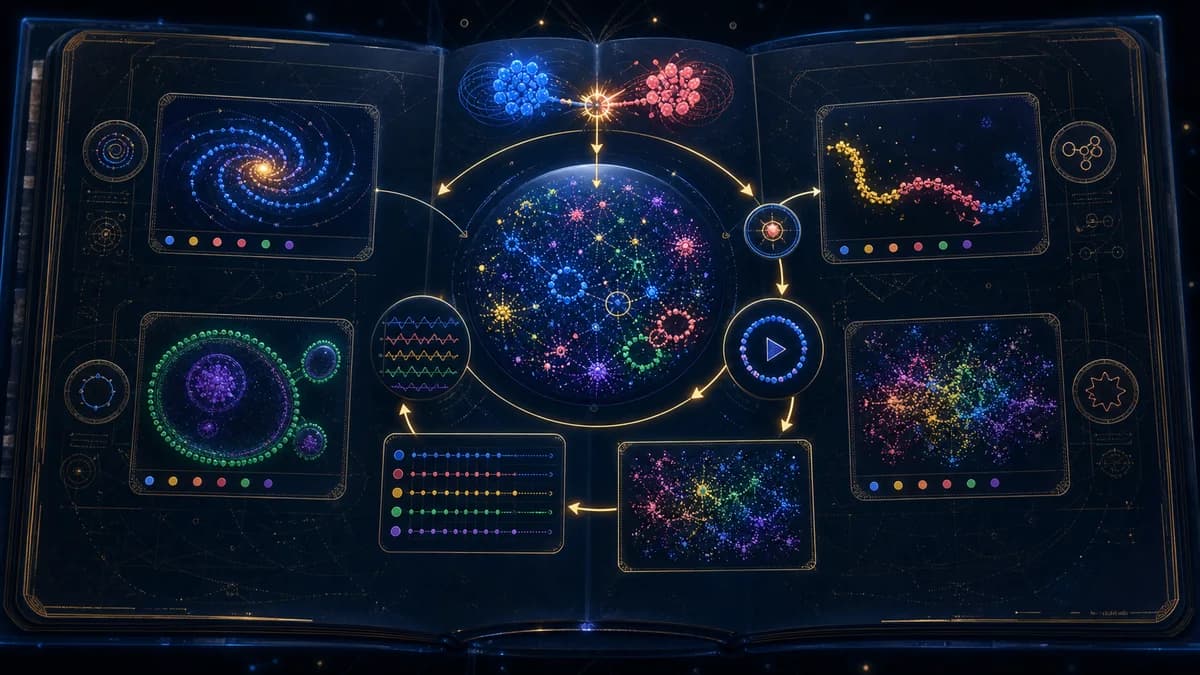 08 / 09
Every control, four guided experiments, deterministic sharing, saved discoveries, screenshots, JSON, CSV, mobile use, and troubleshooting.
 09 / 09
The project began as a visual experiment. It ended by teaching me that spacing, measurement, reproducibility, and interfaces are the same scientific problem.
Thousands of particles. Simple rules. Complex life-like behavior emerges on its own.
Built with TypeScript and WebGPU — no structure is programmed, emergence happens naturally from a simple attraction matrix